Blog / Industry Guides
Property & Facilities Management Software in Singapore
13 Jun 2026 · AppTech System
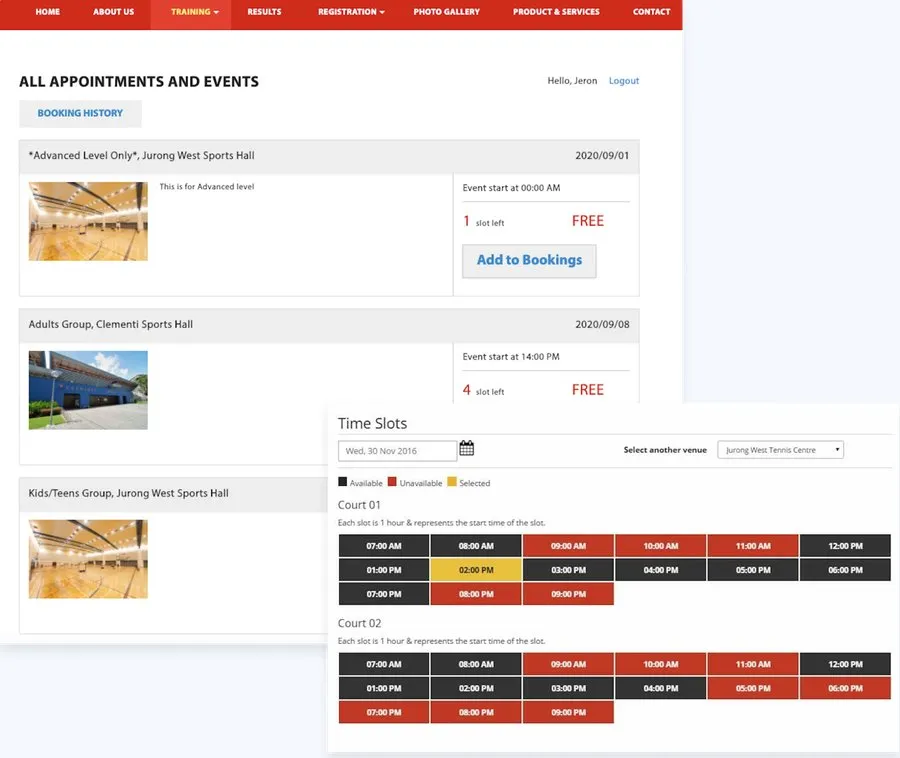
Whether you manage condos, commercial buildings, or shared workspaces, facilities management is a constant stream of small requests — bookings, maintenance, access, complaints — that pile up fast when they are handled over phone, email, and paper. The right software turns that stream into a managed queue. This is a neutral buyer’s guide: the four jobs the software must do, the Singapore rules that change your shortlist, the tools estates here actually use, and the few cases where a custom build beats anything off the shelf.
What are the four jobs this software must do?
Good property and facilities software handles four jobs: facility booking, maintenance and work orders, visitor and access management, and resident or tenant communication. A few tools cover all four; many specialise. Knowing which jobs you actually need is the whole game, because it decides whether one platform fits or you stitch two together.
- Facility booking — residents or tenants book function rooms, BBQ pits, tennis courts, and meeting rooms online, with rules, time slots, and deposits built in. This is the feature residents notice most.
- Maintenance & work orders — fault reporting that runs log → assign → track → close, with an audit trail and response-time data. This is where commercial and portfolio teams spend the most time.
- Visitor & access management — pre-registration, host notifications, and digital records instead of a paper logbook, ideally tied to your gate or turnstile.
- Resident / tenant communication — announcements, notices, billing reminders, and feedback in one channel, with dashboards showing open issues and recurring problems.
In our experience, estates over-buy here. A small condo rarely needs an enterprise asset-management suite, and a commercial tower rarely needs a lifestyle booking app. Map your real workload first, then shortlist.
Why work orders make or break a commercial estate
For commercial and portfolio teams, maintenance is the job that decides whether the software pays for itself. A real system turns every fault, from a flickering corridor light to a chiller fault, into a tracked ticket with an owner, a priority, and a closing timestamp. That audit trail matters twice over: it shows the council or landlord that response times are under control, and it surfaces recurring faults so you fix the cause, not the symptom.
Preventive maintenance is the upgrade most estates underrate. Instead of waiting for a lift, pump, or fire-safety system to fail, the software schedules inspections and logs them against each asset. Singapore-built tools like FacilityBot lean on familiar channels, letting staff or residents report faults over WhatsApp, Telegram, or Teams, which lifts reporting rates because nobody has to learn a new app. For large portfolios, enterprise platforms such as IBM Maximo add IoT and predictive maintenance, flagging equipment likely to fail before it does.
What Singapore rules change your shortlist?
Four local factors reshape the choice: PDPA and the upcoming NRIC-authentication ban, digital payments via PayNow and SGQR, IRAS InvoiceNow for GST-registered managing agents, and government grants. The most time-sensitive is the rule that organisations must stop using NRIC numbers as logins or passwords by 31 December 2026, with enforcement from 1 January 2027 (Baker McKenzie, 2026).
PDPA, NRIC, and the visitor logbook
Visitor logs and resident records are personal data, so collect and store them with consent and reasonable security. The PDPC’s advisory guidelines restrict collecting full NRIC numbers and, for residential security, explicitly suggest alternatives: an electronic visitor management system, an organisation-issued QR code, partial NRIC, mobile or email, or a deposit (PDPC). That advisory is the core argument for a digital visitor system over a paper book. Separately, any resident app that defaults logins or document passwords to NRIC must change before the end-2026 deadline. A quick starting point: our PDPA Readiness Check.
Payments, billing, and e-invoicing
Digital payments are now mainstream in Singapore, with adoption around 92 percent in 2025 and PayNow registrations topping five million by end-2024 (PwC Singapore, 2026). That makes PayNow and SGQR the expected way to collect booking deposits and maintenance fees, with refundable deposits handled cleanly. If the MCST or managing agent is GST-registered, fee billing increasingly needs e-invoice-ready output: IRAS InvoiceNow, the Peppol-based network run by IMDA, phases in from 1 November 2025 for newly incorporated voluntary GST-registrants and 1 April 2026 for all new voluntary registrants, with existing businesses following between 2028 and 2031 (IRAS). Our InvoiceNow guide has the full timeline.
The strata-management backdrop
Most Singapore condos run as MCSTs under the Building Maintenance and Strata Management Act, introduced in 2005 to govern roughly 2,700 management corporations and around 170,000 strata units at the time (BCA). That structure shapes the software: councils and managing agents need clear records of bookings, fees, and maintenance to answer to owners at AGMs, and that accountability is exactly what dashboards and audit trails provide. It is also why the residential tools below bundle fee collection alongside booking and visitor management.
Which tools do Singapore estates actually use?
The market splits three ways: Singapore-built condo and MCST apps, commercial CAFM and CMMS platforms for work orders and assets, and dedicated visitor management. No single tool is best for everyone, so the table groups real products by who they suit. This is orientation, not a ranking, and feature claims below come from vendor marketing, so verify capabilities and pricing directly before you commit.
| Tool | Category | Best for |
|---|---|---|
| BiomeX (Greenbotz) | Condo / MCST | MCSTs wanting one app for visitor access, booking, fee collection and estate comms |
| myCondo | Condo / MCST | Condos needing 24/7 resident booking, visitor and vehicle tracking, digital payments |
| LifeUp (Smart Property) | Condo / MCST | Lifestyle facility booking with refundable online deposits and announcements |
| FacilityBot | Commercial / all-rounder | SG teams wanting messaging-first fault reporting, preventive maintenance and local support |
| Infraspeak | Commercial CMMS / IWMS | Mid-to-large FM teams wanting a connected maintenance platform |
| Spacewell | Smart workplace | Corporate real estate wanting room and desk booking plus maintenance |
| Planon / IBM Maximo | Enterprise asset mgmt | Large portfolios needing deep asset and predictive maintenance |
| Sine (Honeywell) | Visitor management | Offices wanting kiosk or phone check-in, pre-registration, badge printing |
| Envoy Visitors | Visitor management | Modern workplaces wanting customisable sign-in and instant host notifications |
Inclusion is informational, not an endorsement; “best for” reflects each vendor’s own positioning. Feature and pricing claims come from vendor marketing and should be verified directly with each provider before deciding.
The pattern is clear. Condos and MCSTs that want one resident-facing app lean to the local builders like BiomeX, myCondo, or LifeUp. Commercial and portfolio FM teams that live in work orders pick a CMMS such as FacilityBot, Infraspeak, or Spacewell, scaling up to Planon or Maximo for heavy asset management. Offices that only need a cleaner front desk add a dedicated visitor system like Sine or Envoy. FacilityBot is worth a look as the Singapore-based all-rounder, since it spans fault reporting, preventive maintenance, visitor management, and booking with local support.
How should you evaluate the options?
Use a fixed checklist so demos compare like for like. The single criterion most buyers miss is PDPA login design: with the NRIC-authentication ban taking effect from 1 January 2027 (Baker McKenzie, 2026), any system that signs residents in by NRIC is already on borrowed time. Run every shortlisted tool through these ten points.
- Covers the jobs you need — booking, work orders, visitor management, comms — or integrates cleanly with what you keep.
- PDPA-ready — consent capture, reasonable security, retention controls, and no NRIC used as a login or password.
- Resident experience — mobile self-service, 24/7 booking, instant confirmations, minimal app-store friction.
- Payments — PayNow, SGQR and card for deposits and fees, with clean refundable-deposit handling.
- Work-order audit trail — assign, track, close, with SLA and response-time dashboards.
- Visitor flow that fits your lobby — pre-registration, QR or host notification, and access-hardware integration.
- Reporting — open issues, recurring faults, response times, all exportable.
- Local support & data residency — Singapore-based support, known hosting location, real uptime.
- Billing output — accounting and GST e-invoice (InvoiceNow) readiness if the MCST or agent is GST-registered.
- Total cost & grant fit — subscription plus implementation, PSG eligibility, and the cost to export and leave.
What does it cost, and can a grant help?
Vendors rarely publish prices, but the models are predictable: a per-unit or per-door monthly subscription, often split into modules (booking versus visitor management versus CMMS) and tiered by estate size or user count, plus a one-time implementation fee and payment-gateway charges on deposits. The Productivity Solutions Grant (PSG) can offset up to 50 percent of eligible costs for local SMEs, capped at S$30,000 per company per financial year, but only for pre-approved solutions (EnterpriseSG).
Two cautions. First, not every facilities tool is on the PSG list, so confirm your specific solution on GoBusiness Gov Assist before assuming you can claim, and remember claims are never retrospective: you cannot pay the vendor before applying. Second, a bigger change is coming. From the second half of 2026, EnterpriseSG’s new EDGE scheme consolidates EDG, PSG, and MRA into a single Business Grants Portal application, though existing grants stay fully accessible until it launches, so projects need not wait (grants guide, 2026). Our PSG vs EDG guide covers which grant fits an off-the-shelf tool versus a custom build.
| Grant | Co-funding | Best fit |
|---|---|---|
| PSG | Up to 50%, capped S$30,000 / company / FY | Subscribing to a pre-approved off-the-shelf tool |
| EDG | Up to 50% of qualifying costs | Building or transforming custom facilities software |
Grant rates, caps, and eligibility are set by EnterpriseSG and change over time; EDGE consolidation is expected in 2H2026. Confirm current terms and your solution’s status on the official EnterpriseSG and GoBusiness channels.
When should you build custom instead?
For a single condo or building with standard workflows, an off-the-shelf product is almost always the faster, cheaper choice, and you should not build what you can buy. Custom wins in specific cases: when you run a portfolio of estates that no single product fits, when you need deep integration with access hardware, accounting, or SingPass and Myinfo onboarding, or when you want a productised offering to resell to other estates.
That is the work we do. We build booking, work-order, and management systems for property and facilities teams, tailored to how an estate or portfolio actually runs, and a qualifying custom build can be funded up to 50 percent through the Enterprise Development Grant. See our property & facilities page and our enterprise workflow platforms solution, or use the software development services overview to scope a project. For the broader decision, our local vs offshore guide weighs who should build it.
Disclaimer: AppTech System is a software development vendor, not a regulator, accredited adviser, or grant administrator. PDPA obligations and the NRIC rules are governed by the PDPC, GST InvoiceNow by IRAS and IMDA, and the PSG, EDG and incoming EDGE grants by EnterpriseSG; all are subject to change. Product mentions are informational, not endorsements, and capabilities, pricing, PSG eligibility and grant terms should be verified with each vendor and on the official government channels before any decision.
About AppTech System — AppTech System is a Singapore custom-software team and the people behind the Automiq and BooknGo platforms, building web, mobile, AI and enterprise software for businesses in regulated industries. Talk to us.
Drowning in requests, bookings, and work orders?
Talk to Us