Re-keying between systems
Staff copy orders, customer details and payment data between systems. The work is repetitive, slows productivity, and creates errors that someone must find later.


System Integration in Singapore
Your ERP, CRM and accounting software hold different parts of the same transaction. Staff re-key data and check mismatches. We provide system integration in Singapore, connecting the software you already run through custom APIs and automated data exchange.
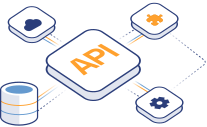
For organizations, the problem sits between systems. Orders sit in one system, payments in another, and finance reconciles the difference. Staff re-key data, chase errors and lose visibility.
We map the systems, technology and data flow before designing a solution around team handoffs. That may use APIs, webhooks, scheduled syncs or middleware. The goal is reliable exchange with less manual work. Before an engineer builds each component, we document the client environment: who owns each record, what network access is available and how conflicts are resolved. This helps teams share information across systems without losing traceability during the transition.
Singapore workflows often combine local services and global cloud platforms. We integrate PayNow, Stripe, GST InvoiceNow through Peppol, and SingPass or Myinfo where needed, with security, access control and PDPA requirements assessed from the start. See our guides on InvoiceNow and SingPass & Myinfo.
Staff copy orders, customer details and payment data between systems. The work is repetitive, slows productivity, and creates errors that someone must find later.
Every report means exporting a CSV from one tool and importing it into another. The process is slow, hard to audit and prone to errors.
Each system holds part of the picture. One holds sales, another holds operations, and finance sees the result after an export. Without a shared data flow, teams make decisions from different versions of the same transaction.
What You Get
Reusable REST or GraphQL APIs give engineers a documented interface between systems. Authentication, validation and error handling make those components easier to test and maintain as technologies change.
Payment, ERP, CRM, accounting, e-commerce, logistics and marketing platforms connected through solutions chosen for their APIs and operating constraints.
PayNow, GST InvoiceNow through Peppol, and SingPass or Myinfo integrations where your workflows need them.
Two-way sync moves approved data between cloud platforms and on-premise systems. It reduces manual imports while keeping record ownership clear.
React to order, payment or status changes. Queues, retries and monitoring help teams investigate failures and recover affected transactions.
Authentication, rate limiting, and clear documentation your team can rely on.
What We Build
Many systems can be connected. Where software has no API, we assess a path that can be secured and maintained.
Reliable REST and GraphQL APIs include authentication, validation, error handling and OpenAPI documentation for maintainability.
Payment, ERP, CRM, accounting, e-commerce, logistics and marketing platforms connect to the workflow your teams already use.
PayNow, GST InvoiceNow (Peppol), SingPass/Myinfo, and other local services where your operations need them.
Two-way data sync can replace repeated exports, imports and re-keying where both systems support it. We define which system owns each record and how conflicts are resolved.
React when an order, payment or status changes. Webhooks trigger the next approved step without waiting for a scheduled poll.
Database access, secure file exchange, SFTP or controlled automation can connect software with no API. The design depends on the system, security constraints and the maintenance path your team can support.
How We Work
We audit the tools involved, the data that moves between them, and where the manual work happens today.
We choose a maintainable approach using APIs, webhooks, scheduled syncs or middleware, then define the data contract and ownership rules. Cloud and on-premise systems may need different access and recovery paths.
We build with authentication, error handling and rate limiting, then test one business flow with real data and edge cases before expanding the scope.
Every API and integration ships with clear documentation your team or any future developer can rely on.
We watch for failures and API changes on the services you depend on, and keep the connection healthy.
Tech & Approach
Logs, alerts, retries and recovery paths help teams trace failures and restore data flow. Before build, we agree on sample records and data owners, then test missing fields, rejected requests and duplicate events. We document integration processes, performance and recovery so support teams can investigate issues and assess resilience. We test users’ experience of failed connections, including messages and correction steps.
Why AppTech
We build local connections for InvoiceNow, PayNow, SingPass and Myinfo, with Singapore requirements considered during discovery and testing.
Every integration ships with clear documentation, so your team or another developer can maintain it.
Authentication, encryption, access rights and audit needs are reviewed for flows touching personal data. We document the controls chosen for each integration.
We also build the software behind your APIs, so integrations fit the system, not the other way around.
APIs change and credentials expire. We monitor connections, handle maintenance and test updates so failures do not go unnoticed.
When a system has no API, we assess database access, secure files, SFTP or controlled automation and recommend a maintainable path.
Start a Conversation
A discovery call starts with the systems involved, the broken handoff and the outcome you need. We then outline a practical next step.
Prefer to talk? +65 6871 8798
Frequently Asked Questions
For businesses, we connect ERP, CRM, accounting, e-commerce, payment, logistics and marketing systems. We also integrate Singapore services such as InvoiceNow through Peppol, PayNow, SingPass and Myinfo. We review the API, data model and operating process before confirming scope.
Often, yes. Options include database integration, scheduled file exchange, SFTP or controlled automation. We recommend a secure, monitored and maintainable path.
Security is part of the design: authentication, encryption, least-privilege access, audit logging and rate limits where appropriate. For personal data, we document collection, storage and sharing for review against PDPA requirements.
Yes. The handover covers data mappings, API specifications, access rules, error handling, monitoring and recovery procedures.
It depends on the number of systems, API quality, data rules, test access and approval cycles. After discovery, we provide a defined scope, delivery stages and responsibilities.
Yes. We can integrate GST InvoiceNow through Peppol, PayNow payment workflows, and SingPass or Myinfo where the service and eligibility requirements fit the use case.
Ask how the team handles security, data quality, failure recovery, documentation, testing and long-term maintenance.
We scope each connection with sample records, application access, data owners and exception cases. Volumes, peak periods and production limits shape performance and scalability requirements. This helps companies weigh a connection’s value against its engineering effort and potential efficiency gains.
Didn't find your question? Ask us directly and a consultant will reply within one business day.