Blog / AI & Automation
The Hidden Cost of Manual Work — and How to Calculate It
13 Jun 2026 · AppTech System

Manual admin rarely shows up as a line item on your P&L — which is exactly why it’s one of the biggest silent costs in a growing business. Re-keying data, chasing approvals, sending reminders by hand: each feels small, but multiplied across your team and the year, the figure is usually far larger than owners expect. The average knowledge worker loses around 209 hours a year to duplicated work alone, on top of all the other low-value tasks (Asana Anatomy of Work, 2023). Here’s how to put a real number on it — and what it’s worth fixing.
What is the hidden cost of manual work?
The hidden cost of manual work is the total annual expense of repetitive admin that never appears as its own line item: salary time spent re-keying and chasing, plus errors, delays and missed opportunities. Asana found 60 per cent of work time goes to “work about work” rather than skilled output (Asana, 2023). Most owners under-count it because it’s spread thinly across the team.
That’s the trap. No single task feels expensive, so nobody adds them up. But the wage you pay for someone to copy figures between systems is real money leaving the business every month, and it compounds quietly as you grow. The fix starts with one number you can actually defend.
The simple formula
The cost of a repetitive task is:
people × hours/week × 52 weeks × hourly cost
For hourly cost, a quick proxy is monthly salary ÷ 160 working hours. That keeps the maths honest without needing a payroll export. So three people spending 8 hours a week each on manual work, at a S$3,500 salary (≈ S$22/hour), is:
3 × 8 × 52 × S$22 ≈ S$27,000 / year
Is S$3,500 a fair number? It’s close to the median gross monthly income for clerical support workers in Singapore, which sits at roughly S$3,500 (MOM, 2025 data). So this isn’t a worst-case figure — it’s the everyday cost of admin staff doing admin work, before you count a single error.
And errors are where it gets worse. The S$27,000 is only the salary time, before you add the cost of mistakes, delays, and the things that don’t get done because the team is busy re-keying. To run your own numbers in seconds, use our Automation ROI calculator.
Where does the cost actually hide?
The cost hides in four places the basic formula never sees: errors and rework, delay, opportunity cost, and key-person risk. McKinsey estimates current generative AI and related technology could automate activities absorbing 60 to 70 per cent of employees’ time (McKinsey, 2023) — which is exactly the time these hidden costs consume.
Errors and rework
Manual data entry carries a measurable error rate — vendor analyses commonly cite around a 4 per cent error rate against automation accuracy above 99.9 per cent. Each error sounds trivial. But a wrong figure on an invoice means a credit note, a chase, a re-issue and an apology. Fixing a mistake downstream almost always costs more than the minute it took to make it.
Delay and a slower cash cycle
Work that waits for a human costs you twice. A quote that sits overnight is a deal cooling; an invoice raised late is cash arriving late. Singapore’s move to InvoiceNow exists partly to compress exactly this lag — sending structured invoices straight between systems instead of by hand shortens the gap between work done and money in.
Opportunity cost
Every hour on admin is an hour not spent on customers, quotes or growth. This is the largest hidden cost and the hardest to see, because it’s the revenue that never happened. With most of a worker’s time technically automatable, the question isn’t whether the hours exist — it’s what your best people would do with them back.
Think about who is doing the re-keying. Often it’s a capable person you hired for judgement, not for copying rows between a spreadsheet and an accounting system. The opportunity cost isn’t just lost hours; it’s those hours spent on the lowest-value version of the job. Asana’s finding that only a minority of time goes to skilled work is really a statement about how much capacity is sitting idle inside processes you already pay for.
Key-person risk
When a process lives in one person’s head, you’re exposed the moment they’re on leave or resign. Manual workflows hide this risk until it bites. A documented, automated process is also a continuity safeguard, not just an efficiency win.
A worked Singapore example, with full numbers
Take a typical SME back office: three staff spending 8 hours a week each on invoicing and data entry, paid around S$3,500 a month (≈ S$22/hour, in line with the MOM clerical median). Below is the full annual cost, then the same picture after automating 60 per cent of that work — a conservative, real-world target for standardised tasks.
| Cost component | Manual (today) | After 60% automation |
|---|---|---|
| Salary time (3 × 8 hrs × 52 × S$22) | ≈ S$27,000 / yr | ≈ S$10,800 / yr |
| Salary time reclaimed | — | ≈ S$16,200 / yr |
| Error & rework cost | Higher (≈ 4% entry error rate) | Lower (validation & auto-checks) |
| Delay / cash-cycle cost | Invoices raised by hand, slower | Auto-raised, faster cash in |
Illustrative figures. Salary anchored to the MOM clerical median (~S$3,500/month); error rate is a vendor aggregate, not a Singapore-specific measure. Use the ROI calculator for your own inputs.
The headline: even on a deliberately conservative model, automating this one workflow reclaims roughly S$16,000 a year in salary time — before you count the errors avoided and the faster cash. Against a one-off build or a subscription, that’s frequently a payback inside the first year.
Notice what this example deliberately leaves out. We’ve put no dollar value on the errors prevented or the days shaved off the cash cycle, because those vary by business and we’d rather under-claim than guess. Even so, the salary-time saving alone clears most automation budgets. When you do add the error and delay savings back in, the real return is higher than the table suggests — which is the point: the conservative number is already enough to act on.
What can automation realistically win back?
Realistically, most back-office processes are 50 to 80 per cent automatable — and the Singapore evidence backs this up. SMEs using AI-enabled solutions under the Productivity Solutions Grant achieved average cost savings of 52 per cent in 2024 (IMDA Singapore Digital Economy Report, 2025).
You won’t automate 100 per cent, and you shouldn’t try. The aim is to take the repetitive, rules-based core — the copying, the reminders, the routine approvals — and let people handle the judgement calls. That’s also why the McKinsey 60 to 70 per cent figure is a technical ceiling, not a promise: the realistic, safe target for a single SME workflow tends to land in that 50 to 80 per cent band.
The shift is already visible locally. SME AI adoption in Singapore rose from 4.2 per cent to 14.5 per cent in a single year, and 95.1 per cent of SMEs had adopted at least one digital area (IMDA, 2025). To work out what to automate first, describe your operations to the AI Automation Finder and start with the one task costing you the most.
Why is this getting cheaper — and partly mandatory — in Singapore?
In Singapore, automation is getting cheaper and, for invoicing, becoming mandatory. The Productivity Solutions Grant funds up to 50 per cent of qualifying costs, capped at S$30,000 per company per financial year for pre-approved digital solutions (Enterprise Singapore). Meanwhile, IRAS is phasing in mandatory e-invoicing through InvoiceNow.
That reframes the whole decision. The manual invoicing you’re paying staff to do today is becoming digitisation you’ll have to adopt regardless. IRAS is bringing GST-registered businesses onto InvoiceNow in stages:
- From Nov 2025 — newly-incorporated companies that register for GST voluntarily.
- From 1 Apr 2026 — all new voluntary GST registrants must transmit invoice data to IRAS via InvoiceNow.
- From 1 Apr 2028, staged to 1 Apr 2031 — existing GST-registered businesses brought in progressively.
So the question isn’t really “should we digitise invoicing?” — it’s “do we do it on our own timeline, with the cost savings, or wait until it’s a compliance scramble?” See the IRAS Committee of Supply 2026 announcement for the full timeline, and our InvoiceNow guide for what the mandate means in practice. For broader grant choices, our PSG vs EDG guide covers which scheme fits an off-the-shelf tool versus a custom build.
When should you build custom instead of buying a tool?
For most standard admin — invoicing, reminders, simple approvals — an off-the-shelf tool or a configured platform is the right, fast choice, and you shouldn’t build what you can buy. Custom (or extending a platform) earns its keep in specific cases: when your workflow is unusual enough that no product fits, when you need deep integration between systems that don’t talk to each other, or when the process is a genuine competitive advantage worth owning outright.
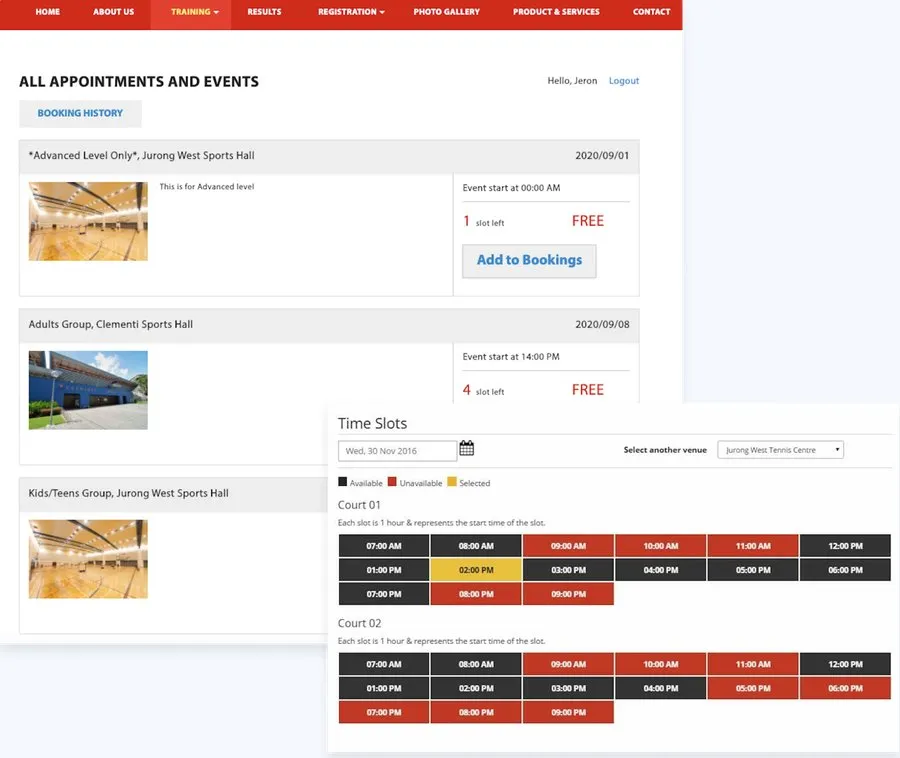
That’s the work we do. For back-office and workflow automation, our Automiq platform is the on-brand answer to the “60 per cent automatable” problem, and for bookings and scheduling our BooknGo platform handles intake, reminders and payments. If you’re weighing a build, our software development services page and our guide on choosing a software company in Singapore walk through how to scope it sensibly.
From number to action
Once you’ve sized the cost, the next move is to pick a single task and act. Start with the one workflow costing you the most — usually invoicing, data entry or reminders — and automate that first. Sizing the number is the point most owners stop at; the saving only arrives when you change one process.
Run your figures in the Automation ROI calculator, then describe your operations to the AI Automation Finder to see the highest-value candidates. You don’t need a transformation programme. You need one expensive manual task, measured and removed.
Disclaimer: AppTech System is a software development vendor, not a tax, grant or accounting adviser. Government programmes (the Productivity Solutions Grant, the GST InvoiceNow requirement and related schemes) are governed by Enterprise Singapore, IRAS and IMDA, have eligibility conditions, and are subject to change. The figures here are illustrative; confirm current rates, dates and eligibility with the relevant agency before acting.
About AppTech System — AppTech System is a Singapore custom-software team and the people behind the Automiq and BooknGo platforms, building web, mobile, AI and enterprise software for businesses in regulated industries. Talk to us.
What is manual work costing you? Find out in 2 minutes.
Calculate It