Blog / Guides
Custom Software vs SaaS vs No-Code: Which Is Right for You?
13 Jun 2026 · AppTech System
There are three broad ways to get software for your business: buy off-the-shelf SaaS, assemble it on a no-code platform, or build something custom. None is “best”; each wins in different situations. The right question is not which is best, but which trade-off fits this workflow, this budget, and this time horizon. This guide weighs the four axes that decide it — cost, speed, control and lock-in — and shows when each option wins for a Singapore SME. (If your question is specifically build-vs-buy, start with our custom vs off-the-shelf guide.)
What are the three options in plain terms?
SaaS, no-code and custom software sit on a spectrum from “rent a finished product” to “own a bespoke one”. Singapore SMEs are well past the starting line here: per IMDA’s Singapore Digital Economy Report 2025, around 95.1 per cent of SMEs have adopted at least one digital solution, so most firms are now choosing their second or third tool, not their first.
- Off-the-shelf SaaS — a ready-made product you subscribe to, like Xero or QuickBooks Online for accounting, or StoreHub for retail point-of-sale. You adapt to the tool.
- No-code / low-code — visual platforms such as Bubble or Retool that let a non-developer assemble an internal app or MVP without writing much code.
- Custom software — a system built to fit your exact process, like a bespoke booking or workflow-automation platform. You own the result.
How do the three options compare side by side?
On the four axes that matter, the pattern is consistent: SaaS is cheapest to start but rises about 11 per cent a year, no-code is fast but hits a ceiling, and custom costs most upfront but gives full control and the lowest lock-in. The table below summarises the trade-offs.
| Axis | Off-the-shelf SaaS | No-code / low-code | Custom software |
|---|---|---|---|
| Upfront cost | Low (subscription) | Low–moderate | High |
| Ongoing cost | Recurring, rises ~11%/yr | Recurring + scaling fees | Maintenance only (flatter) |
| Time to launch | Days | Days–weeks | Weeks–months |
| Customisation / control | Limited | Moderate (hits a ceiling) | Full |
| Data ownership | Vendor-hosted | Vendor / proprietary | You choose / you own |
| Lock-in risk | Moderate–high | High (no code export) | Low (own the source) |
| Best-fit horizon | Standard, short-term | MVP / validate | Differentiated, long-term |
| SG grant fit | PSG (pre-scoped) | Sometimes PSG | EDG |
Qualitative comparison for orientation, not a scorecard. Cost direction draws on the Vertice SaaS Inflation Index (2025); grant fit on Enterprise Singapore’s PSG and EDG criteria. Verify against your own quotes.
Why does cost over time catch buyers out?
Because the sticker price is the smallest part. SaaS looks cheap monthly, but renewals compound: industry data found SaaS prices rose 11.4 per cent in the year to January 2025, roughly five times the G7 consumer-inflation rate. Add per-seat scaling and integrations and the real cost climbs well above the headline.
No-code carries its own late cost. The platform fee rises with users and records, and when you outgrow the tool you can face a rebuild on a different stack — a step-change, not a smooth line. Vendor analyses (such as Betty Blocks) note that re-platforming off a no-code tool can run into five or six figures, so the “cheap to start” option is not always cheap to keep.
Custom inverts the shape. You pay more upfront, then the curve flattens to maintenance, because there are no per-seat licences and no annual vendor hike. [UNIQUE INSIGHT] In our experience the crossover usually lands somewhere in a three to five year window: below that, SaaS almost always wins on cost; beyond it, a heavily-used custom system often costs less in total than the subscriptions it replaced. The longer your horizon and the more seats you add, the more that maths tilts toward building.
What is lock-in, and why is it the hidden axis?
Lock-in is how hard and expensive it is to leave. It is the axis buyers weigh least and regret most. With no-code it is highest: logic often lives in a proprietary format with little or no code export, so switching can mean rebuilding from zero. Gartner expects low-code to power around 75 per cent of new applications by 2026 (Gartner), which makes exit planning more urgent, not less.
SaaS lock-in is subtler but real. Your data sits on the vendor’s servers, often offshore, and exports may be partial or awkward. The vendor controls the roadmap, the price and the terms, and a sunset or acquisition can force a migration on their timeline, not yours. [PERSONAL EXPERIENCE] The migrations we are most often asked to rescue are not failures of a bad tool; they are good tools a business simply outgrew, with data trapped in formats that resist a clean exit.
Custom software is the low-lock-in option for one structural reason: you own the source code and the data. You choose where it is hosted, who maintains it, and when it changes. That control is also a Singapore data-residency lever: with custom you decide whether customer data stays onshore, where SaaS and no-code usually decide that for you. Ownership, not features, is the real dividing line.
When does each option win for a Singapore SME?
The default by stage is clear: validate on SaaS or no-code, build custom once a workflow becomes your edge. With SME AI adoption tripling from 4.2 per cent to 14.5 per cent in a single year (IMDA, Singapore Digital Economy Report 2025), more Singapore firms are reaching the point where a generic tool no longer fits. Use these rules of thumb.
- Standard need (accounting, email, generic CRM), tight budget, can adapt to the tool → SaaS. Fast to start and maintained for you; watch per-seat fees and a “60 per cent fit” that forces workarounds.
- Simple internal tool or MVP, need it next week, a non-developer will maintain it → No-code. Great to validate an idea; watch the complexity ceiling and platform lock-in.
- The software is your operation, or tools keep getting in the way at scale → Custom. Exact fit, full control, an asset you own; watch the larger upfront cost.
It is rarely all-or-nothing. The strongest stacks we see keep SaaS for commodity functions (payroll on Talenox, books on Xero), build custom where it is the edge, and integrate the two through APIs. You do not have to pick one religion for the whole business.
How do Singapore grants and compliance change the maths?
Two government grants quietly tilt the build-versus-buy decision. The Productivity Solutions Grant (PSG) funds pre-scoped, off-the-shelf solutions at up to 50 per cent of qualifying costs, capped at S$30,000 per company per financial year. The Enterprise Development Grant (EDG) can instead support a custom build.
The split matters. PSG subsidises adopting a vendor’s SaaS, so it favours the buy route for accounting, HR or POS tools. EDG covers up to 50 per cent of qualifying consultancy, software and internal manpower costs on a reimbursement basis, which is the lane for a bespoke project. So the same S$60,000 problem can attract very different funding depending on which route you choose. Our PSG vs EDG guide walks through which grant fits which path, and you can run a quick EDG eligibility check before you decide.
Compliance now forces some choices outright. Singapore’s GST InvoiceNow mandate began on 1 November 2025 for newly incorporated voluntary GST registrants, extends to all new voluntary registrants from 1 April 2026, then phases in by turnover band through to 2031 (Avalara, March 2026). Whichever route you pick, your accounting tool must be InvoiceNow-ready: see our InvoiceNow guide for the detail.
Disclaimer: AppTech System is a software development vendor, not a government agency, tax adviser or accredited grant consultant. Grant schemes (PSG, EDG), their caps and qualifying-cost rules, and the InvoiceNow / GST and PDPA obligations referenced here are governed by Enterprise Singapore, IRAS, IMDA and the PDPC, and are subject to change. Figures and timelines should be confirmed against the official sources before any decision. Product mentions are illustrative, not endorsements, and pricing models vary by plan.
A buyer’s evaluation checklist
Before you commit to any route, score each shortlisted option against the criteria that actually decide total cost and fit, not the demo dazzle. Work through these in order:
- Workflow fit — does it match how you operate, or do you bend your process to the tool?
- Total cost over 3–5 years — not sticker price; add integrations, per-seat scaling and renewal hikes.
- InvoiceNow & PDPA compliance — is it InvoiceNow-ready, and where does your data reside?
- Data ownership & export — can you export data in a usable format, and do you own the IP?
- Lock-in / exit cost — how hard and expensive is it to leave or re-platform?
- Integration — does it connect to PayNow/SGQR, your bank feeds and existing systems?
- Customisation ceiling — when you hit a limit, can you extend it, or are you stuck?
- Scalability — does cost or performance break as users and transactions grow?
- Grant eligibility — is it PSG pre-scoped (SaaS) or EDG-supportable (custom)?
- Support & vendor longevity — local support, a clear SLA, and a vendor likely to exist in five years.
When should you build custom instead?
For standard needs, you should not build what you can buy — SaaS is the faster, cheaper, compliant choice. The cases where custom (or extending a platform) wins are specific: your process is your competitive edge and no tool fits without painful compromises, per-seat SaaS costs balloon at scale, or a no-code tool has hit a complexity or performance ceiling you cannot get past.
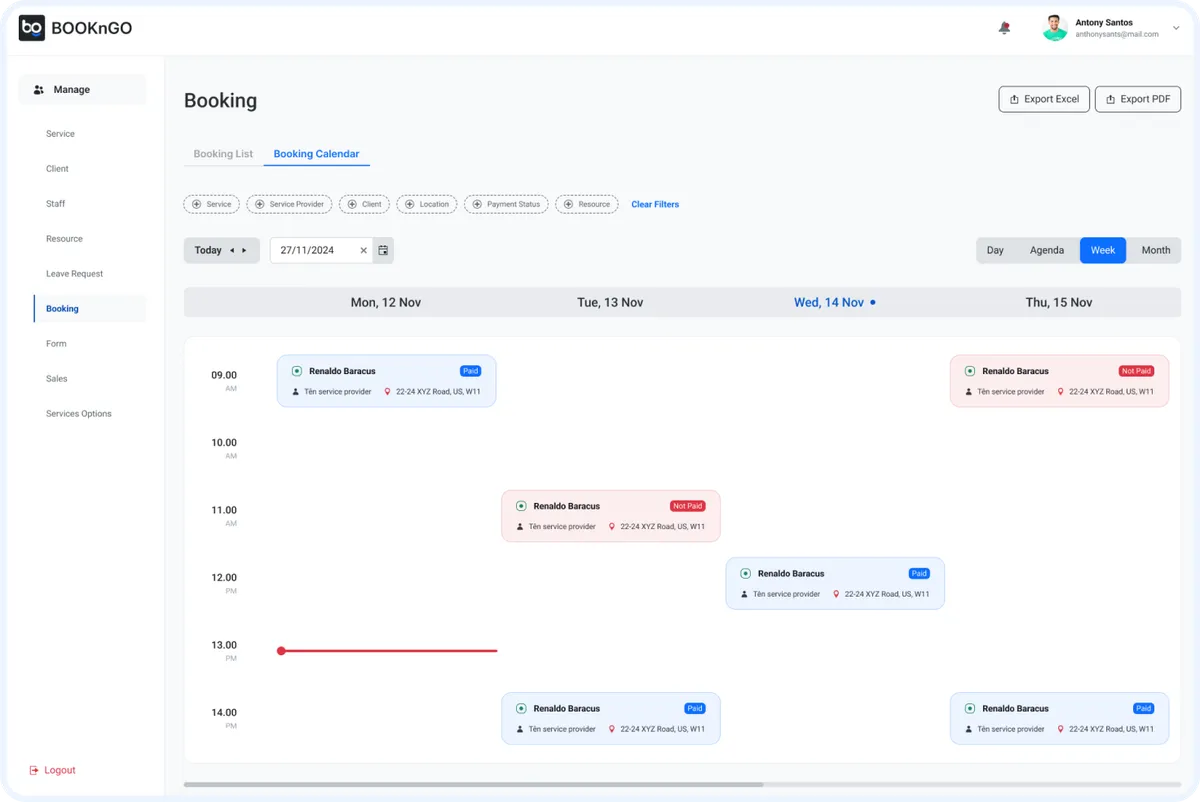
That moment — “we have outgrown SaaS” or “no-code hit a wall” — is the work we do. Our Automiq platform replaces stitched-together SaaS with bespoke workflow automation, and BooknGo handles booking, reminders, payments and intake tailored to how a business actually runs. Starting from proven platform modules cuts both the upfront cost and the maintenance burden of going fully bespoke. To pressure-test the numbers, our project estimator gives an indicative range, and you can read how a structured build works in our how we work overview. For the deeper build-vs-buy decision, our guide on custom vs off-the-shelf walks through when each wins.
About AppTech System — AppTech System is a Singapore custom-software team and the people behind the Automiq and BooknGo platforms, building web, mobile, AI and enterprise software for businesses in regulated industries. Talk to us.
Not sure which fits your problem? Let's think it through — free.
Book a Consultation